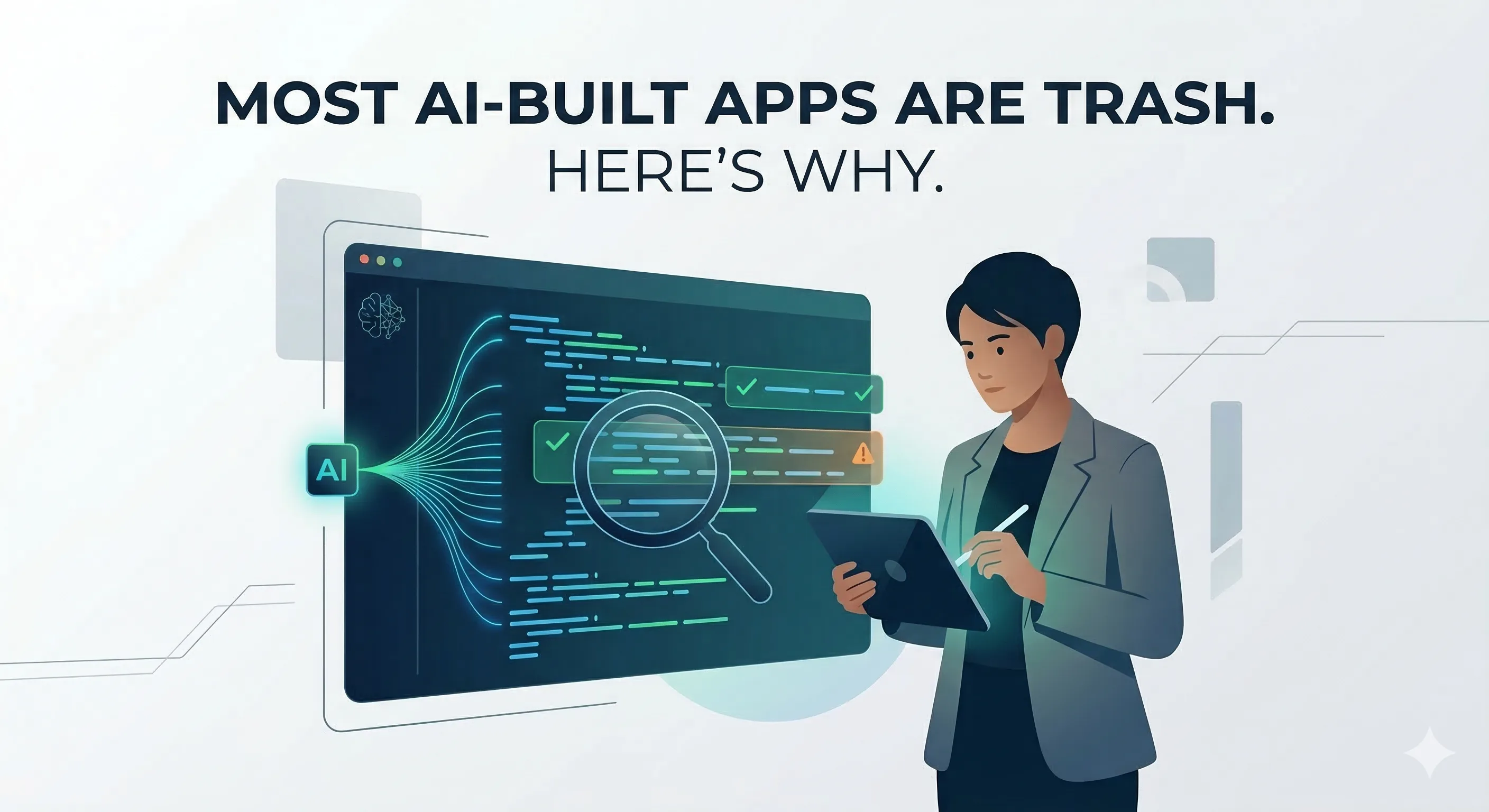
Something subtle but profound is happening in software engineering.
We’re not just writing code anymore. We’re reading it. Reviewing it. Interrogating it.
And increasingly, the code isn’t even written by us.
Note: The conversation that sparked this post happened in the Claw Syndicate Slack channel.
”We are becoming the code reviewer human”
That line, casually dropped in a conversation, captures the shift perfectly.
Developers are evolving into something new:
- Senior Code Reviewer Engineer
- Staff Code Reviewer Engineer
- Or, as one engineer jokingly coined it: CCO — Chief Code Reviewer Officer 😄
It sounds funny. It’s not.
Because the real skill now isn’t typing fast. It’s thinking clearly about code you didn’t write.
The New Core Skill: Reading
The most valuable skill going forward isn’t a framework or language.
It’s this:
- Reading deeply
- Understanding what you read
- Maintaining focus long enough to catch subtle issues
AI can generate thousands of lines in seconds. But it cannot guarantee correctness, intent, or long-term maintainability.
That responsibility is still human.
AI Doesn’t Create Bad Code. Weak Engineering Does
As one experienced engineer put it:
Technical debt is not something AI inherently creates. It reflects how strong the engineering process is.
AI is a multiplier.
- Good process -> faster delivery
- Bad process -> faster chaos
Without proper testing, monitoring, and strong CI/CD pipelines, AI simply accelerates mistakes.
Speed vs Stability
Another engineer nailed the tradeoff:
AI can accelerate things, but without strong engineering, it just accelerates problems.
This is the paradox of modern development:
- You can ship faster than ever
- But you can also break things faster than ever
The bottleneck is no longer writing code. It’s ensuring the code is worth shipping.
The Illusion of “I Built This in a Weekend”
There’s a growing trend:
I built a full app this weekend with no prior experience.
As many senior engineers point out, most of these are half-baked CRUD apps:
- No scalability
- No robustness
- No real-world complexity
Yet they go viral.
This creates a dangerous illusion: software engineering is trivial now. It isn’t.
The Market Is Already Reacting
A common concern from senior engineers:
- Lower salaries
- Unrealistic expectations
- “The market is changing” as blanket justification
The hype is often being driven by non-technical decision-makers.
But markets eventually correct. They always do.
This Isn’t New. It’s a Cycle
Every generation thinks it’s witnessing something unprecedented.
As many of us have seen repeatedly:
Technology is always changing. AI is just another step in that cycle.
A useful comparison is the early Skype days:
Everyone thought they were experts. 😂
History repeats itself. Just with better GPUs.
The Bright Side
Despite all the noise, there’s something exciting here.
We’re entering a phase where:
- Boilerplate disappears
- Repetitive coding fades
- Thinking becomes the real differentiator
The engineer of the future is not just a builder.
They are:
- A reviewer
- A systems thinker
- A quality gatekeeper
Final Thought
AI didn’t replace developers.
It raised the bar.
The question is no longer:
Can you write code?
But:
Can you understand, evaluate, and take responsibility for code at scale?
Because in this new world, the best engineers won’t be the fastest typers.
They’ll be the sharpest readers.
Want to strengthen your engineering process for AI-native development?
If you’re building with AI and want to tighten review quality, delivery discipline, and long-term maintainability, I’m happy to share practical frameworks that work.